
"I think it's a good idea to try to harmonise all this, knowing that it's a first step, because after that you're going to want to move toward the users, toward the uses, because functional properties is a very, very broad notion. [...] Hence the importance of choosing an entry point, which may at some point become several entry points as things scale up, but we have to make choices to start with something concrete."
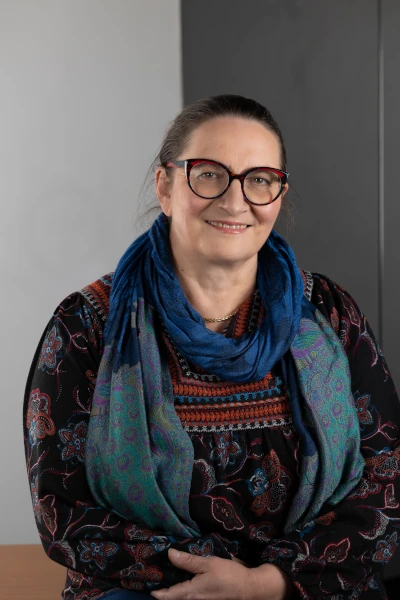
— Catherine Renard, INRAE Researcher, Director of Carnot Qualiment
Could you briefly describe the COST Action and the role of Working Group 1?
Adeline explained that the COST Action has a similar ambition to the INFOGEST initiative, but in the field of ingredient functionality. Its aim is to harmonise methods and practices used to probe the functional properties of food ingredients, while preparing open-access data structures that could later support artificial-intelligence approaches for prediction.
The immediate goal is to establish methodological and data foundations. Working Group 2 will review and select relevant characterisation methods, while Working Group 3 will test and validate these methods through ring tests. Working Group 4 will focus on database structure, data storage and user-friendly visualisation. Working Group 1 is responsible for long-term strategy, stakeholder mapping, identification of existing networks and databases, and ensuring that the project meets user expectations.
Why is method harmonisation needed in this field?
The interview confirmed that each laboratory currently tends to use its own methods and experimental variables. This creates a serious limitation: published results cannot easily be compared, reused or transformed into predictive models. For example, two laboratories may claim to measure solubility, gelation or emulsifying properties, but the exact protocols, sample preparation, conditions and output indicators may differ substantially.
Catherine stressed that vocabulary and definitions are also a major issue. Without shared terms and ontologies, it will be difficult to build a meaningful database or make data interoperable across laboratories, technical centres and industrial users.
Which functional properties should be prioritised?
The current entry point is strongly influenced by expertise in protein ingredients. The likely initial focus will be on properties commonly measured for plant-protein ingredients, including solubility, foaming, gelling and emulsifying properties.
Catherine encouraged the team to think carefully about the scope. Antioxidant properties, antimicrobial properties, bioactive molecules and enzyme-inhibition activities are also sometimes considered functional properties. However, including everything at once would make the COST Action too broad. The recommendation is to define a clear starting scope, while keeping the door open to additional properties later.
What risks arise if methods are applied without considering ingredient type?
Catherine gave the example of antioxidant tests developed for phenolic compounds being applied to protein ingredients. If a test is performed in ethanol and the protein ingredient is insoluble, the measurement may be unsuitable. Similarly, protein ingredients containing phenolic contaminants may produce apparent antioxidant signals that could be overestimated if the method is not adapted.
This example illustrates why methodological harmonisation must include not only a standard protocol, but also an assessment of relevance: a method must be appropriate for the ingredient, matrix, functional property and intended use.
Which existing initiatives or networks should WG1 examine?
Catherine first pointed to ontology-related communities such as TransformON and the work of Patrice Buche and Magalie Weber. She also mentioned resource people and units involved in protein or food-ingredient topics, including STLO, IATE and colleagues such as Valérie Le Chevalier.
A particularly relevant initiative identified during the discussion was DataVeg, described as a Carnot Qualiment project on predicting the processability of plant proteins in analogue-type matrices through experimental approaches and multicriteria analysis. The project appears closely aligned with the COST Action’s goals and could provide useful methodological and data-structuring insights. RMT Just Formulation was also identified as a promising network for monitoring, characterisation, composition, properties and functionality.
Catherine also mentioned Sym’Previus (https://symprevius.eu/en/), a database linked to microbiological risk prediction, as an example of a tool that combines data, modelling and practical user needs.
How organised is the French and European ecosystem for ingredient characterisation?
Catherine distinguished between composition analysis and functional-property characterisation. For analytical composition, the ecosystem is relatively structured, with recognised European networks and large service providers. By contrast, functional-property characterisation remains more fragmented because methods are less automated, less standardised and more dependent on application context.
She noted that technical centres often occupy the space between academic research and industry. They may be organised by product sector, application, ingredient type or technological expertise. Relevant French actors mentioned include CTCPA, ADRIA Quimper, ADIV in Clermont-Ferrand, Actalia for dairy products, ITERG, Improve, and Aerial in Strasbourg. Similar applied or semi-applied organisations exist elsewhere in Europe, including in Spain, the United Kingdom and the Netherlands, with examples such as IRTA, Campden BRI, Wageningen University & Research, TNO and NIZO.
What lessons can be learned from earlier attempts to align methods?
Catherine recalled an initiative within the Bridge2Food network, aiming to prepare a review or consensus document on methods for characterising plant-protein ingredient functionality. The ambition was to prepare a review or consensus document on methods for characterising plant-protein ingredient functionality. The initiative did not reach completion, apparently because contributors approached the topic at different levels.
Academic researchers tended to describe protocols and mechanisms, while industrial contributors referred to dispersibility, practical solubility, emulsification indices and application-oriented indicators. This mismatch is highly instructive for the COST Action: harmonisation must bridge differences not only in methods, but also in language, purpose and required level of detail.
What role could certification or standardisation bodies play?
The team asked whether the COST Action could contribute to certified or standardised methods. Catherine explained that method certification and formal standardisation are possible, but they are long and formal processes. Ring tests can be part of the route toward validation, but organisations such as AFNOR, or equivalent bodies in other European countries, should be contacted to understand requirements and procedures.
Catherine cited NF V03-741 as an example of a specific French standard method linked to protein solubility in maize and the evaluation of denaturation of heat-sensitive proteins. This suggests that standardised methods often emerge from concrete sector needs and commercial stakes. In functional ingredients, such stakes exist because sellers and buyers need shared specifications and quality-control criteria.
What are the main barriers for the COST Action?
The strongest barrier identified by Catherine is data access. Much of the relevant data is generated by industry, not by academic research, and is often proprietary. This is a major limitation if the project aims to support artificial-intelligence prediction, because high-quality, comparable and sufficiently large datasets are needed.
A second barrier is scope. Functional properties are broad, and different communities may define them differently. A third barrier is adoption: even if academic laboratories agree on methods, the wider community may not adopt them unless the methods answer practical needs.
What are the main opportunities?
The central opportunity is method harmonisation. If researchers can trust that data generated elsewhere are comparable with their own, the field can make faster progress on structure-property relationships. Harmonised data may also support ingredient selection, formulation, breeding and process optimisation.
Another opportunity is long-term community building. INFOGEST showed that a COST Action can change scientific practice when it provides a clear, useful and shared protocol. For the present COST Action, a similar impact may be possible if the project chooses a concrete entry point, validates methods through ring tests, supports usable data infrastructure and maintains dialogue with technical centres and industry-facing users.
How do stakeholder needs differ?
The discussion highlighted that different stakeholders require different levels of precision and throughput. Researchers may need accurate values to understand mechanisms. Ingredient producers and industrial users may need methods that support specifications, application trials and quality control. Breeders may need rapid screening methods that can process hundreds or thousands of varieties, even if the outputs are less precise.
Catherine explained that breeders often do not need to know whether a protein is soluble at exactly 170 g/L or 175 g/L. They may only need broad categories that can be linked to genomic regions, proteins or genes. This means that the COST Action should not assume that one “best” method will satisfy every user group. Some may privilege precision, other throughtput.
What methodological innovations could be relevant?
The group discussed the lack of medium-throughput methods for functional properties. Some properties, such as solubility, may be easier to adapt to higher-throughput screening, while interfacial properties are more difficult. Microfluidics may offer possibilities, but equipment availability and accessibility become important constraints.
Catherine suggested speaking with Rémi Clément at REVERSAAL or a related unit, who develops open-access instrumentation using commercially available building blocks. Such approaches could make it easier to disseminate reproducible laboratory setups across the network.
What final advice did Catherine give?
Catherine concluded that harmonising functional-property methods is a good and necessary first step, but the project must eventually move toward users and uses. Because “functional properties” is a very broad concept, the COST Action needs to choose a concrete entry point at the beginning, then expand gradually as the network matures.
She also encouraged the team to send information about general COST meetings to TransformON so that it can be redistributed to relevant communities. The interviewers confirmed that the information from the interviews would be synthesised, shared with COST members and, where needed, sent back to Catherine for validation.